
Strategy
Website strategy and information architecture
We clarify the audience, offers, sitemap and conversion path before any design begins, using our marketing strategy process.
HubSpot Website Design
A well-built HubSpot website lets your marketing team publish pages faster and gives sales cleaner lead data. It also makes it easy to see which pages are driving real pipeline.
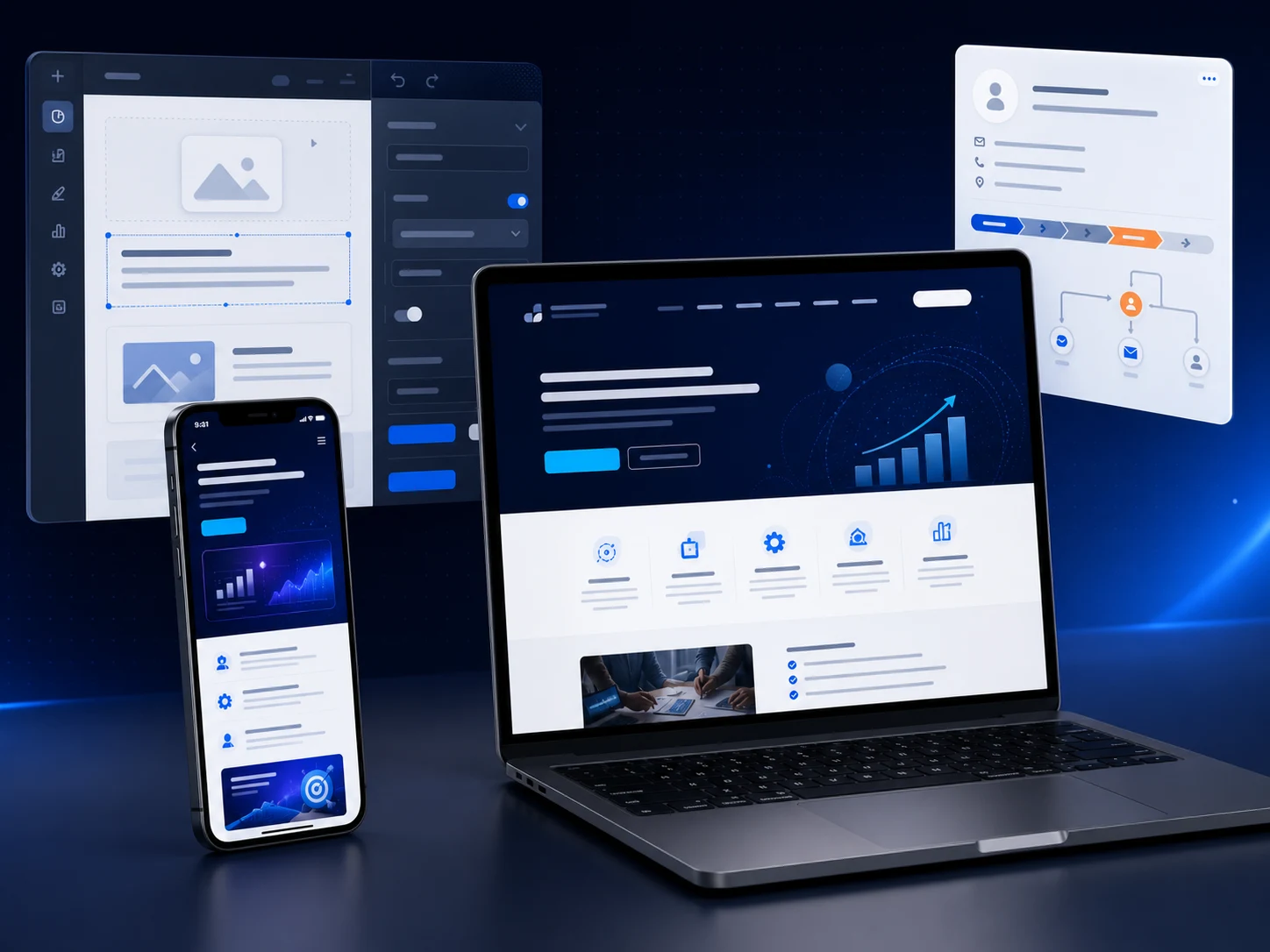
Visual build system
The page is planned as reusable modules, controlled editor fields, and responsive output your team can keep improving after launch.
What we build
Moving a website to HubSpot Content Hub does not automatically make it flexible. That depends on how the theme, templates, modules and editing controls are planned and built. A rushed build can leave marketing with rigid layouts, unclear fields and hardcoded sections that still require a developer for every meaningful change.
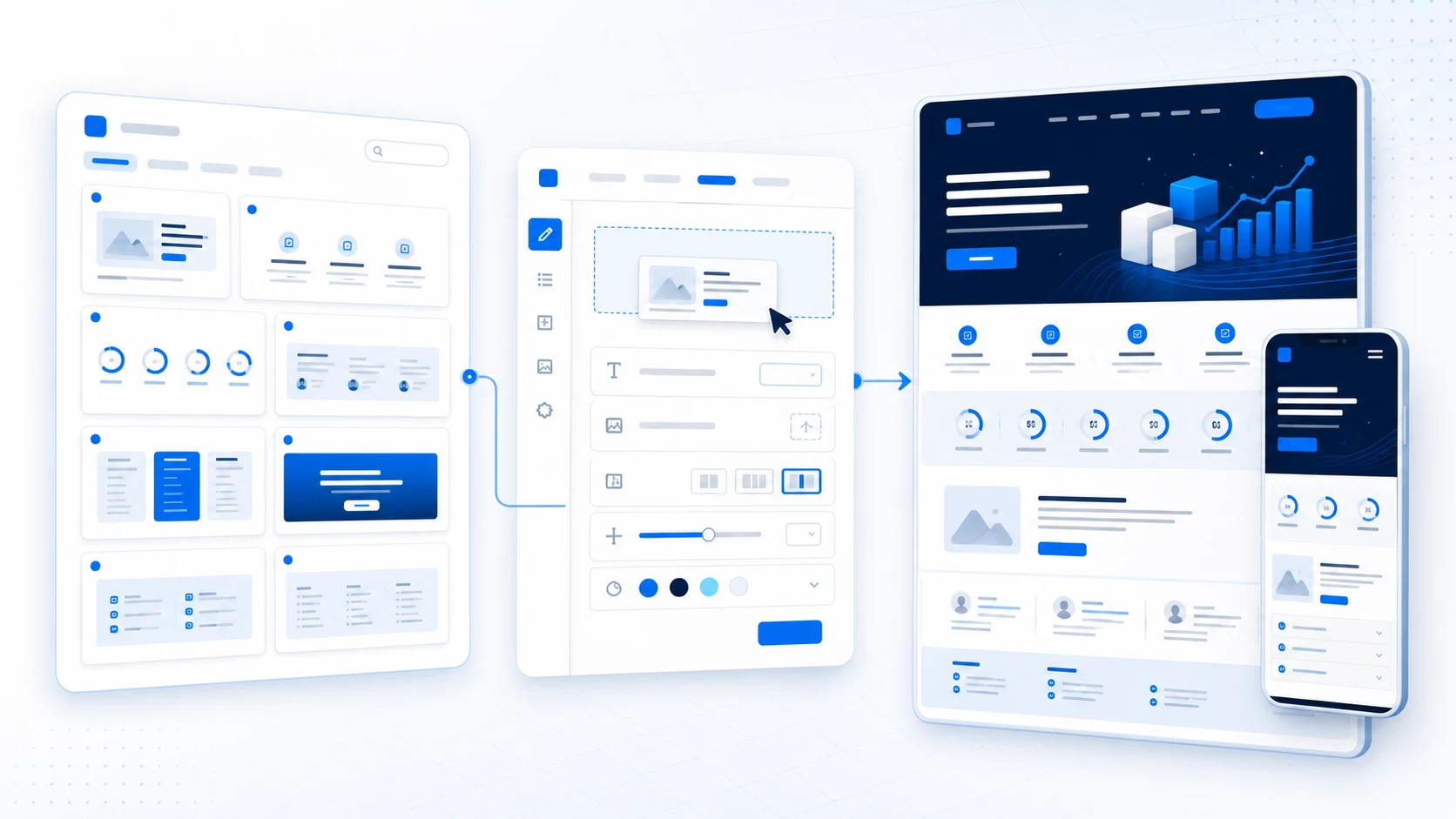
We build the opposite. Your team receives reusable sections, sensible controls and clear design guardrails so they can publish a landing page, update a service, replace a testimonial or adjust a CTA without breaking the visual system.
HubSpot’s CMS architecture connects website content, lead collection and analytics with the CRM. That is why the editing experience and the lead journey should be planned together, not handed to separate teams at the end of the project.
Editors combine approved blocks to create pages without redesigning every component.
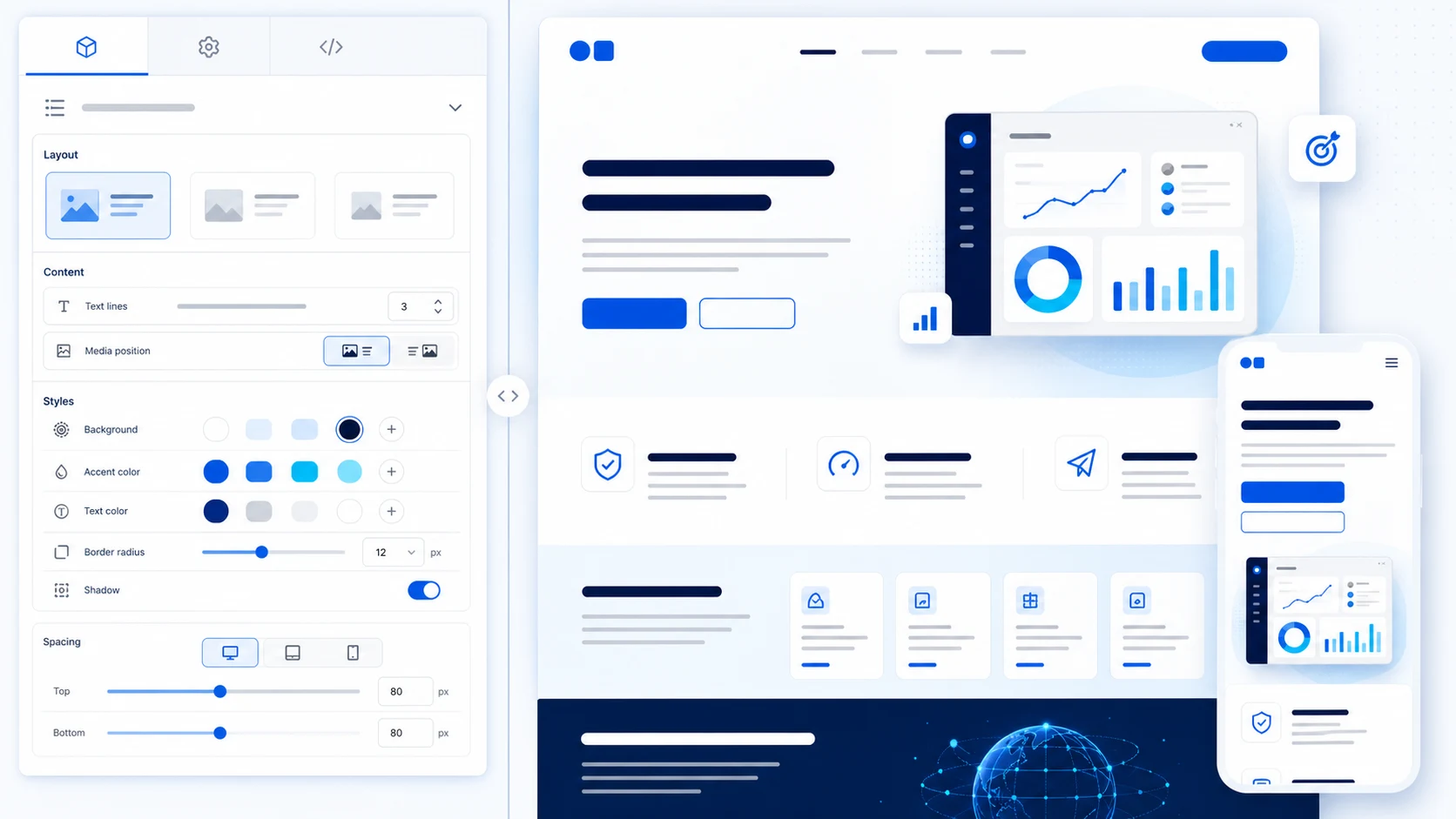
Fields have understandable names, help text and useful defaults. No guesswork.
Typography, colour, spacing and component behaviour remain consistent across all editors and sessions.
Every form submission creates a contact record, triggers ownership and starts the follow-up sequence.
Where projects get stuck
These are the situations clients describe when they come to us for a rebuild or a rescue.
What we deliver
Every project brings together the right specialists at the right stage. The scope depends on whether you are launching a new site, redesigning within HubSpot or migrating from another platform.
We clarify the audience, offers, sitemap and conversion path before any design begins, using our marketing strategy process.
Wireframes and branded interface designs through our web design capability, with HubSpot editing requirements included from the start.
Custom themes using HubL, HTML, CSS and JavaScript, planned around your page types and editing workflow.
Reusable modules for hero sections, service grids, testimonials, pricing tables, resource cards, FAQ groups and form or meeting-booking blocks.
Structured directories, partner listings, resource libraries and team profiles managed from a HubDB table instead of individual pages. Requires Professional tier.
Audit of the current theme, templates, modules and editing experience before deciding what to keep, improve or replace. See our website modernisation approach.
A full project covering template rebuilds, content migration, form recreation, URL mapping, redirect implementation, analytics reconnection and complete lead-journey testing before launch. Every WordPress plugin and custom function is reviewed individually.
Titles, descriptions, headings, internal links, canonical URLs, indexation, structured data, sitemaps and redirects. Our SEO service is involved before development is complete, not after.
New modules, template improvements, campaign pages and continuous website improvements after launch.
Editor experience
A flexible website should not give editors unlimited control over everything. That often creates inconsistent spacing, colours and mobile layouts. We decide which choices help the team and which decisions should remain protected by the design system.
Editors combine approved sections to create pages without redesigning every block from scratch.
Fields use HubSpot module and theme fields with understandable names, help text and useful defaults.
Typography, colour, spacing and component behaviour stay consistent even when different team members create pages.
The module determines how content adapts on smaller screens instead of expecting the editor to repair mobile layouts manually.
Practical guidance for every template, module and global setting delivered in the project.
Recorded walkthroughs using your real pages and publishing tasks, not a generic tour of HubSpot.
Build approach
Not every project needs the most expensive route. The right choice depends on the brand, content, timeline, publishing workflow and functional requirements.
Option A
A sensible option when an available theme already supports most of the layouts you need and the business can work comfortably within its visual system. We configure global styling, select appropriate templates and build pages without unnecessary custom development.
Smaller sites · Tighter budgets · Standard contentOption B
A HubSpot child theme allows a developer to extend a parent theme while keeping custom changes separated from the original package. Works well when the base theme is strong but needs additional styles, modules or templates.
Solid base · More control neededOption C
Designed around the brand, content model and publishing workflow. Instead of adapting the business to an existing theme, templates and modules are built around the page types and editor controls the team actually needs.
This option is where the CRM integration, smart content and HubDB dynamic pages are most effectively planned from the ground up.
Established B2B brands · Complex sites · Long-term programmesCRM and lead flow
A visitor should not disappear into a generic inbox after submitting an enquiry. We plan the path from page visit to form submission, contact record, lead ownership, follow-up and reporting, integrating the website with HubSpot CRM setup, automation and analytics.
Migration and SEO
Changing a URL, removing a page or rebuilding navigation changes how visitors and search engines move through the site. No responsible agency can promise that rankings will never fluctuate after a major move. The goal is to understand the current site, protect valuable pages and remove avoidable mistakes. Google’s site-migration guidance is a useful baseline reference.
Collect current URLs, titles, descriptions, headings, internal links, status codes and indexation signals from the live site.
Identify important organic landing pages, conversions, backlinks and content that should be preserved or improved.
Give every changed or removed URL a planned destination where a relevant replacement exists before development begins.
Use HubSpot content staging to review redesigned pages before they replace the live versions.
Check navigation, internal links, forms, tracking, mobile behaviour, metadata, canonical tags, redirects and key conversion journeys.
Implement and verify HubSpot URL redirects, then monitor crawling, indexation, broken links, form activity and Search Console reporting.
Scope gaps to watch for
A lower price is not automatically a warning sign. An experienced independent developer with a clear scope can be the right choice for a focused project. The real risk is a proposal that says “HubSpot website development” without defining what will be designed, built, migrated, tested and handed over.
How we work
Each stage has a clear outcome before the next one starts. You receive a scope document before any design begins and a launch checklist before any page goes live.
We review the current website, audience, offers, content, HubSpot setup, reporting and internal publishing process. The aim is to identify the real problems before a design direction is chosen.
We define the sitemap, page types, templates, modules, forms, integrations, migration work and project responsibilities. You receive a clear picture of what is included and what is not.
Key pages are planned around content priority, user questions and conversion paths. Approved wireframes are developed into a visual system that fits the brand.
We develop or configure the theme, templates, global content and custom modules. Pages are tested as the system is built rather than leaving every problem until the end.
Content is added or migrated, forms are connected, redirects are prepared and the site is reviewed across the agreed devices and browsers.
We complete the launch checklist, publish the website, verify tracking and form activity, train the team and document the system. Launch creates a stable foundation, not the end of improvement.
Selected work
Specific delivery facts are more credible than a vague claim about transformational growth. When project details are approved for publication, this section will include real screenshots, module counts and delivery outcomes.
Typical proof points checked during handover:
What you keep
A useful handover is more than an administrator login. The proposal and contract should state exactly what is transferred, what is licensed and what support remains available. Meet the people behind the work.
The agreed HubSpot development assets remain in the client's portal under the ownership terms in the contract.
Approved Figma files and related assets are organised for future use or handoff to another designer or developer.
The team receives practical guidance showing where modules are used and what each important setting controls.
The approved URL map and redirect file are retained for launch review and future troubleshooting.
Key templates, devices, forms and workflows tested during the project are documented.
Right fit
This service is a strong fit for B2B and SaaS companies, professional-service firms and marketing teams that need the website, CRM and reporting to work as one system.
Cost and scope
There is a major difference between configuring an existing theme, extending one with custom modules and creating a fully custom B2B website. Our current pricing framework can help with early planning, but the final proposal should be based on the actual page, module, migration and integration scope.
Ten pages using two templates require less design and development than ten pages with ten different layouts.
A simple card grid and an interactive calculator or directory involve very different levels of development and testing.
A project moves differently when final copy and images exist compared with one that also requires positioning, writing and production.
The number of pages, blog posts, files, forms, redirects and structured records affects effort and timeline.
Property mapping, routing, workflows, marketplace apps, APIs and custom data add scope that must be documented before development begins.
A new five-page site has different requirements from a large migration with years of organic history and a continuing support retainer.
Questions
Let us talk
Share your current website, HubSpot plan, page count, target launch date, and what your team struggles to manage today. We will review it and recommend whether you need a theme configuration, child theme, custom build, redesign, or full migration.