
Key takeaway
The three citation priorities: claim and complete your Google Business Profile, ensure NAP consistency across the top 20 directories, and clean up any duplicate or incorrect listings.
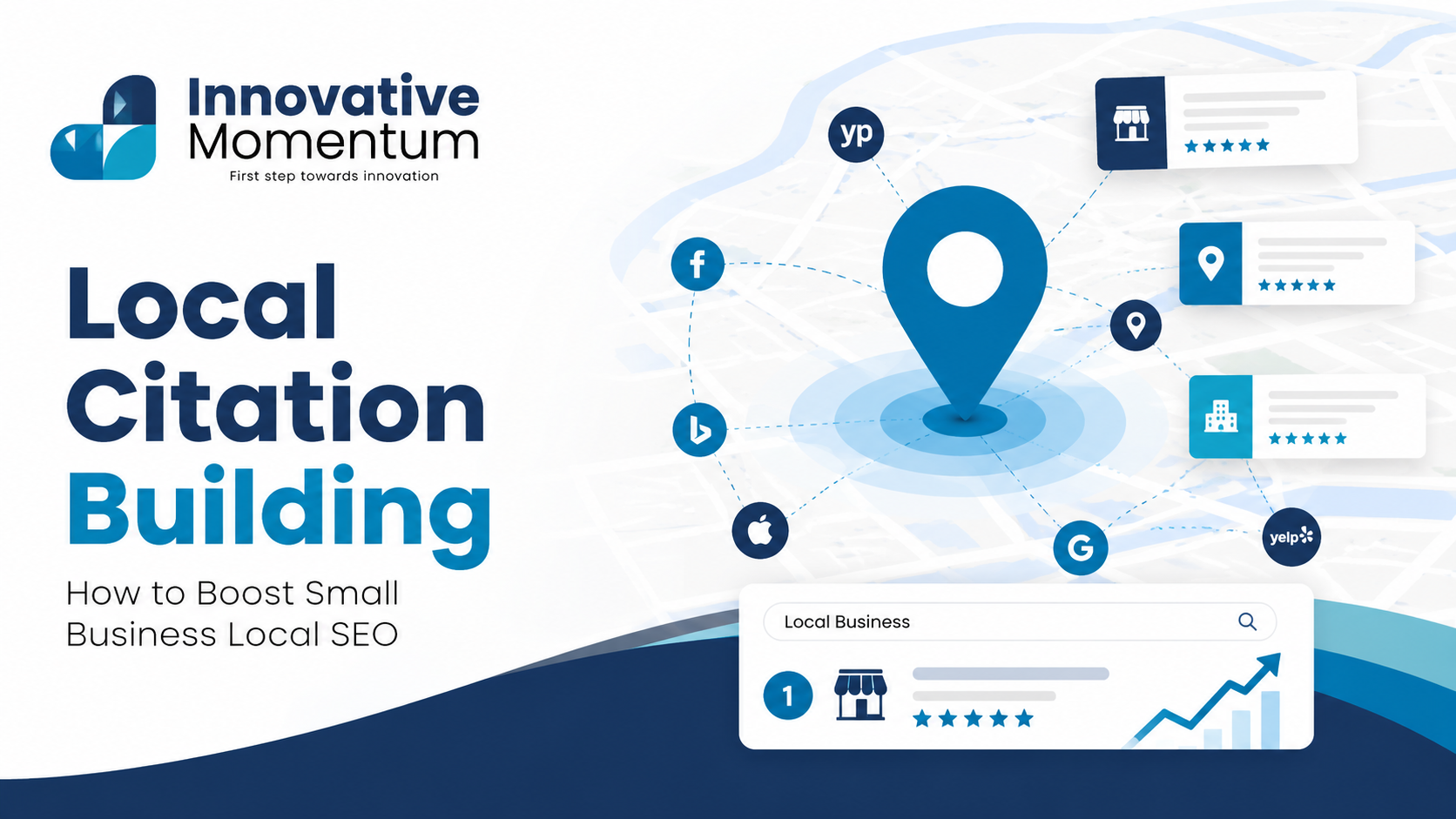
Local citations are online mentions of your business’s name, address, and phone number (NAP) across directories, review sites, and industry platforms. They are one of the foundational elements of local SEO — Google uses citations to verify that your business is real, that the information on your Google Business Profile is accurate, and to determine how prominently to show you in local search results. For service businesses competing for local customers, a strong citation profile is as important as on-page optimization and review quantity.
This guide covers what citations are, why they matter, how to build them correctly, and how to audit and fix inconsistencies that may be undermining your local search visibility.
Why Citations Matter for Local SEO
Google cross-references business information across multiple sources to build confidence in what it shows users. When your business name, address, and phone number are consistent across dozens of authoritative directories, Google is more confident that the information is accurate — and more willing to show your business prominently for local searches. Inconsistent citations (different phone numbers, abbreviated vs. full address, business name variations) confuse Google’s verification process and can suppress local rankings.
Citations also function as trust signals. A business listed in 50 reputable directories has demonstrated enough real-world presence to earn those listings — it is harder to fake than a single well-optimized website. This is why new businesses benefit significantly from citation building: it accelerates the establishment of verified, credible business identity in Google’s eyes.
Innovative Momentum
Want to implement these strategies for your business?
We help businesses grow with digital marketing, SEO, and AI-ready content strategies.
Our guide on local SEO for small businesses covers how citations fit within the full local ranking system, alongside Google Business Profile optimization and review management. The citation element is most important for new businesses and for businesses with inconsistent historical information across the web.
NAP Consistency: The Foundation
NAP — Name, Address, Phone number — must be identical across every citation. Not just approximately the same: character-for-character identical. “St” vs “Street,” “Ltd” vs “Limited,” “(0161)” vs “0161” — these variations are detected by Google’s citation processing as inconsistencies. Before building new citations, define your canonical NAP format and document it so that every new listing uses exactly the same information.
Define your canonical NAP:
- Business name: Use the exact legal or trading name. Avoid keyword stuffing in the business name on directories — “Manchester Plumbers – Emergency Services 24/7” is a policy violation on most platforms and a manipulation signal to Google.
- Address: Full address with consistent abbreviation format. If your official address uses “Street” not “St”, use “Street” everywhere. Include suite or unit numbers consistently.
- Phone number: One primary number with consistent formatting. Decide on a format (01234 567890 vs 01234567890) and use it everywhere.
Priority Citation Sources
Not all citation sources have equal value. Priority order for citation building:
Tier 1: Major platforms (highest priority)
- Google Business Profile: Not a traditional citation but the most important local presence to optimize. Our guide on Google Business Profile optimization covers the full setup and ongoing management.
- Bing Places for Business: Microsoft’s equivalent of Google Business Profile. Bing search still processes significant local search volume, particularly on Windows devices and with AI search integrations.
- Apple Business Register: Feeds business data to Apple Maps and Siri. Used by all iPhone users and increasingly by AI assistants.
- Facebook Business Page: Functions as a citation source as well as a social media presence. Business information on Facebook is referenced by multiple other directories.
Tier 2: Major directories
- Yell.com (UK) / Yelp (US/International)
- Thomson Local (UK)
- Scoot (UK)
- FreeIndex (UK)
- Trustpilot (international)
- Companies House (for UK companies) — verifies business existence with Google
Tier 3: Industry-specific directories
These vary by sector. Trades: Checkatrade, TrustATrader, RatedPeople. Legal: Solicitors Regulation Authority. Financial: FCA register. Healthcare: NHS Find a GP/Dentist. Being listed in authoritative, sector-specific directories sends strong vertical authority signals.
How to Build Citations Efficiently
Manual citation building is time-consuming. The recommended approach:
- Start with Tier 1 platforms: These are most important and must be set up manually. Spend the time getting these right before anything else.
- Use a citation service for scale: Services like BrightLocal, Whitespark, or Yext submit your business to dozens of directories simultaneously and monitor for inconsistencies. BrightLocal’s Citation Builder service (approximately £2-3 per citation) is cost-effective for building a citation foundation. Yext’s managed service is more expensive but provides real-time syndication and updates.
- Target niche and local directories: Once the major directories are complete, identify local Chamber of Commerce directories, business improvement district listings, and regional news site business directories. These local citations carry strong geographic authority signals.
Auditing Existing Citations
Before building new citations, audit what already exists. Businesses often have inconsistent historical citations from different trading names, moved addresses, or changed phone numbers — these legacy citations actively undermine current local SEO even when newer listings are correct.
Citation audit process:
- Search BrightLocal’s free citation tracker or Whitespark’s Citation Finder for your business name and phone number
- Document every listing found, noting any inconsistencies
- Prioritize fixing high-authority listings (Google, Bing, Facebook, Yell) first
- Contact directory owners directly to update incorrect information — most major directories allow owner claims and updates via a free account
Common inconsistencies found during audits: old address from a previous location, multiple phone numbers from different periods, business name variations (trading name vs. legal name vs. abbreviated name), and closed listings for businesses that have moved rather than updating the existing listing.
Schema Markup and Citations
Your website’s LocalBusiness schema markup is your website’s own citation — it tells Google directly what your business name, address, phone number, and business type are. This schema data should be identical to your canonical NAP format. Our guide on schema markup for small businesses covers LocalBusiness schema implementation, including how to add it correctly to a WordPress site and how to validate it with Google’s Rich Results Test.
Measuring Citation Impact
The impact of citation building shows up in local pack rankings (the map results that appear for local queries), Google Business Profile views, and organic click-through rate for local searches. Track these via Google Business Profile Insights and Google Search Console. Citation impact is typically visible within 4-8 weeks for new citations and within 2-4 weeks for fixed inconsistencies, as Google’s crawlers re-process updated directory information.
For the full local SEO picture including citations, reviews, and on-page local optimization, our SEO for service businesses guide covers the integrated approach. For help with a citation audit and building campaign, contact Innovative Momentum.
Frequently Asked Questions
How many citations does a small business need?
Quality and consistency matter more than raw quantity. A small service business competing in a local market typically benefits significantly from 40-80 accurate, consistent citations across a mix of Tier 1 platforms, general directories, and industry-specific directories. Beyond 100 citations, the incremental local SEO benefit per additional citation diminishes. In low-competition markets, 20-30 well-placed citations may be sufficient to establish strong local presence.
Should I pay for premium directory listings?
Free listings on major directories provide citation value without premium costs. Paid listings typically offer additional features (featured placement, enhanced profiles, call tracking) rather than better citation value. For businesses where directory listings are a primary source of client enquiries (e.g., Checkatrade for trades, VouchedFor for financial planners), the premium listing cost may be justified by the direct lead generation. As a pure citation-building tool, free listings are sufficient.
What should I do if my business has moved?
Update your Google Business Profile address first — this is the highest-priority update. Then work systematically through your major directory listings. Run a citation audit to find all listings with the old address and update them. Do not create new listings on platforms where you have an existing listing with the old address — claim and update the existing listing. Leaving old address listings in place while creating new ones creates duplicate listings that confuse Google and dilute your citation strength.
Voice Search and Local Citations
Voice search (“Hey Siri, find a plumber near me”, “OK Google, who is the best accountant in Birmingham?”) pulls heavily from Google Business Profile data, Apple Maps listings, and structured data markup on your website. Citations are part of the verification layer that makes Google and Apple confident enough in your business information to read it aloud in a voice response.
For voice search optimization specifically, consistent NAP citations combined with structured LocalBusiness schema on your website create two reinforcing data sources. When Google’s voice system encounters a local query, it cross-references its business knowledge graph (built from citations) with your website’s schema data. Discrepancies between the two reduce confidence in the information and reduce the likelihood of being selected for a voice response. Consistent citations and accurate website schema markup work together rather than independently.
Our guide on schema markup for small businesses covers LocalBusiness schema implementation in detail, including the address and contact information fields that feed directly into voice search responses and AI assistant queries.
Tracking and Reporting Citation Progress
Citation building is a slow, iterative process. Progress tracking tools help you understand what is done, what is pending, and where inconsistencies remain:
- BrightLocal Citation Tracker: Scans over 300 data sources for your business NAP and flags inconsistencies. The monthly report shows coverage percentage across major directories and a breakdown of consistent vs. inconsistent listings.
- Whitespark Citation Finder: Identifies citation opportunities by finding where your competitors are listed that you are not. Particularly useful for identifying industry-specific and local directories that BrightLocal’s general scan may not surface.
- Moz Local: Manages citations across the major data aggregators (Foursquare, Factual, Acxiom, Infogroup) that feed hundreds of smaller directories. Correcting information at the aggregator level propagates changes to hundreds of downstream directories automatically.
Set a quarterly citation audit as part of your regular marketing maintenance — after address changes, phone number changes, or business name changes, run a full audit to find and update all affected listings. Leaving even a few major listings with outdated information erodes the consistency benefit of all the correct listings. For the full local SEO picture that includes citations alongside GBP optimization, reviews, and on-page local signals, our local SEO guide covers the complete local ranking system. For a citation audit and building service for your business, contact Innovative Momentum.
Industry-Specific Citation Strategies
Citation building strategy varies significantly by industry. Trades businesses (plumbers, electricians, builders) derive strong local SEO authority from Checkatrade, TrustATrader, and RatedPeople — which function simultaneously as citation sources and direct lead generation platforms. Professional services (solicitors, accountants, financial advisers) benefit from citations in their regulatory body’s public register (SRA, FCA, ICAEW) which carry extremely high authority because they are verified, cannot be gamed, and are among the first results Google shows for professional service queries.
For healthcare providers, NHS Find a GP, NHS Dentist Finder, and Care Quality Commission registers are the highest-authority citations available and should be treated as Tier 1 alongside Google Business Profile. For hospitality businesses (restaurants, hotels), Google Business Profile, TripAdvisor, and OpenTable are the citation foundations — with TripAdvisor functioning as both a citation and a direct traffic source that affects both Google local rankings and direct bookings.
Understanding which citation sources carry the most authority in your specific vertical — rather than building a generic high-volume citation profile — produces more efficient local SEO results. Forty citations in the right industry and local directories typically outperform 200 generic directory listings. For service businesses, our guide on SEO for service businesses covers how citations integrate with the full local SEO strategy including Google Business Profile, reviews, and on-page local signals. For a citation audit and industry-specific citation building service, contact Innovative Momentum.
Duplicate Listings: Merging vs. Removing
Duplicate listings — two or more listings for the same business on the same platform — are one of the most damaging citation problems. They split authority, confuse Google’s verification process, and can cause the wrong listing (with outdated information) to outrank the correct one. When a citation audit finds a duplicate on Google Business Profile, claim both listings and request a merge through Google Business Profile support. For other directory duplicates, contact the directory directly to remove the older or less complete listing. Do not simply leave a duplicate because removing it requires effort — an unclaimed duplicate with old information is actively working against your local rankings. For the full local SEO picture, our local SEO guide covers citations alongside all local ranking factors.

Keep reading
Related insights
No comments yet. Be the first to share your thoughts.