
Key takeaway
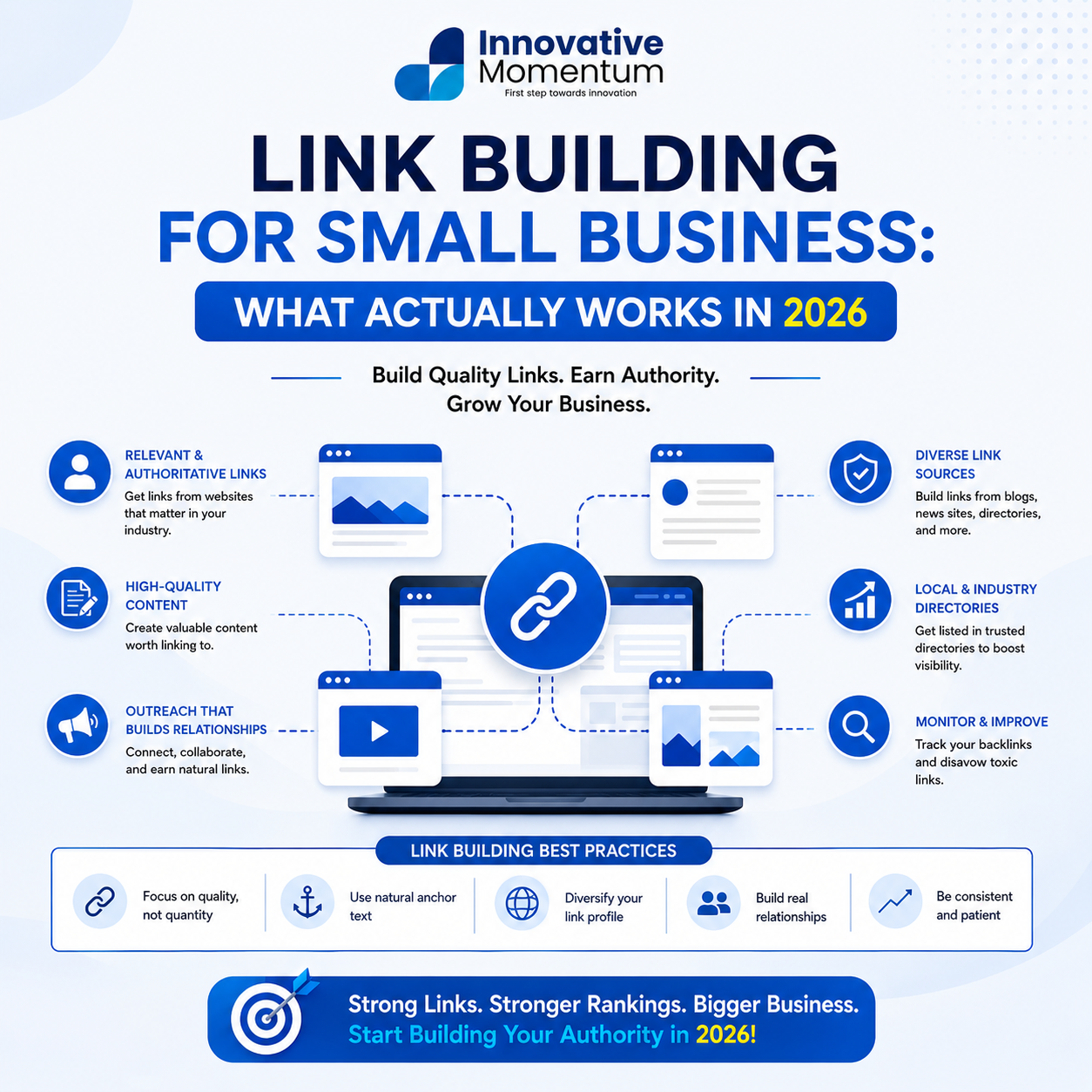
One link from a relevant, high-DR domain beats 50 links from generic directories HARO responses are the highest ROI free link building tactic for most small businesses Buying links from link marketplaces now consistently triggers Google penalties Unlinked brand mentions are the easiest high-value tactic — contact the author and ask for the link Local businesses have a structural advantage: chambers, associations, and local press give editorial links
Link building is the hardest part of SEO for small businesses to do well — and the most consequential. Backlinks remain the strongest off-page signal in Google’s algorithm. A page with fewer but stronger backlinks consistently outranks a page with more but weaker ones. The challenge in 2026 is that Google has become significantly better at identifying and discounting manipulative link building, while the tactics that still work require either time, credibility, or both.
This guide covers the link building tactics that produce results for small businesses today, the ones that have been devalued or penalized, and how to build a plan you can actually stick to.
What Google counts as a quality backlink in 2026
A quality backlink in 2026 has three characteristics: it comes from a relevant domain (same industry or adjacent topic), it is placed editorially (the linking site chose to link because your content was useful, not because you paid), and it appears in context (within body copy, not in a footer link farm or directory sidebar).
The link spam update timeline: Google’s link spam updates (2021, 2022, 2023, 2024) systematically devalued bought links, low-quality directory links, private blog network (PBN) links, and AI-generated mass guest posts. The approach that worked in 2019 — buy 50 links from a link marketplace — now routinely results in manual penalties rather than ranking improvements.
Get a quoteInnovative Momentum
Want to implement these strategies for your business?
We help businesses grow with digital marketing, SEO, and AI-ready content strategies.
What still works: effective link building tactics for small businesses
1. Digital PR (most scalable, highest value)
Digital PR involves creating genuinely newsworthy content — original research, a surprising statistic, a useful tool, or a strong opinion on an industry trend — and pitching it to journalists and industry bloggers who cover your topic. A single placement in an industry publication with a DR 50+ domain can deliver more ranking impact than 50 low-quality directory links. Start by: (a) identifying the 10–20 publications your ideal clients actually read, (b) creating one piece of original data or research, and (c) sending a personalized pitch to 3–5 journalists at each publication.
2. HARO and media requests (low cost, high value)
Help A Reporter Out (HARO), Qwoted, and Connectively connect journalists with expert sources. By responding to relevant media queries — “looking for a web designer who can explain AI’s impact on local SEO” — you earn editorial mentions and backlinks from high-authority news and magazine sites. Set up alerts for your topic categories and respond within 2 hours of queries going live. Response speed is the primary success factor.
3. Resource page link building
Many industry websites maintain “resources” or “useful links” pages that link to helpful tools and guides. These are editorial in nature (the site owner chose to include them), topically relevant, and relatively easy to earn. The process: (a) search [your topic] + “resources” or “useful links”, (b) find pages that already link to similar content, (c) create something better or complementary, (d) reach out suggesting your resource as an addition.
4. Local citations and partnership links
For local businesses, links from local chambers of commerce, local media outlets, industry associations, and business directories carry significant local ranking weight. These are often easier to earn than national links: join your local chamber ($300–$500/year), get listed in your city’s business directory, sponsor a local event, and ask your business partners to link to your site.
5. Unlinked brand mentions
If your business is mentioned in a publication without a link, contact the author and ask them to add one. They already know who you are, they already wrote about you, and adding a link takes 30 seconds. Use Google Alerts or Ahrefs Alerts to track brand mentions. This is the easiest high-value link tactic that most small businesses never use.
6. Strategic guest posting (narrow scope)
Guest posting still works, but only on legitimate, high-quality publications that have genuine audiences. A guest post on a major industry blog with 50,000 monthly readers from your target market delivers both a quality backlink and referral traffic. A guest post on a low-traffic site that only exists to sell guest post placements delivers neither, and now risks a Google penalty.
What no longer works (and what to avoid)
A realistic link building timeline for small businesses
- Month 1–2: Fix foundational issues. Claim and optimize all tier-1 citations (GBP, Yelp, Apple Maps, Bing Places, Facebook). Set up HARO/Qwoted alerts. Identify your 10 target publications.
- Month 3–4: Create one original piece of data or research. Reach out for 5–10 unlinked brand mentions. Submit to 3–5 high-quality industry directories.
- Month 5–6: Pitch your first digital PR piece to 20–30 journalists. Write one genuine guest post for a high-quality industry publication. Track and respond to all HARO queries in your niche.
- Ongoing: 2–3 HARO responses per week. One new outreach campaign per quarter. Track new brand mentions monthly and convert to links.
Measuring link building: what metrics actually tell you if it’s working
Most small businesses track the wrong things. They watch their Domain Rating (DR) or Domain Authority (DA) score creep up by a point or two each month and assume that means the work is paying off. The problem: DR and DA are lagging indicators. They aggregate across your entire backlink profile, update slowly, and can be influenced by low-quality links that add nothing to your actual rankings.
What to track instead:
- Rankings for the specific target keywords on the pages you are building links to. Check these monthly in Ahrefs or manually in Google Search Console. If the page you built three links to in March is now ranking at position 6 instead of position 14, that is meaningful data.
- Organic traffic to those specific pages, pulled from GSC or GA4. A ranking jump that does not produce traffic is often a signal that you moved from below the fold to just above it on a term with low volume.
- Position changes in GSC for those pages, compared month over month. GSC’s “Average position” column, filtered to the page URL, is one of the most direct indicators of whether link equity is accumulating.
The timelines matter here too. Links earned today typically affect rankings in 4 to 12 weeks, not days. Google needs to crawl the linking page, process the link, and factor it into its scoring model for your target URL. A HARO placement from a DR 80 publication will not move you from position 8 to position 1 overnight. What it does is build cumulative authority that compounds over 6 to 12 months, particularly when paired with additional links from topically related sources.
A single link from a DR 70+ publication with topical relevance is worth more than 50 links from generic directories. The question is not how many links you are building — it is how much authority and relevance they carry.
One more thing to track: referring domain diversity. A healthy link profile grows by adding new unique root domains over time. If you are earning 10 links per month but they all come from the same 3 sites, you are not building the diversity that signals organic authority.
A practical HARO/Connectively workflow for consistent results
HARO (now operating as Connectively) sends media queries three times per day: 5:00 am, 12:30 pm, and 5:30 pm EST. Most practitioners who get consistent placements are in those emails within 30 to 60 minutes of delivery. Here is the workflow that produces results.
First, create a dedicated email filter so HARO emails land in their own folder and never get buried. Subject lines contain “HARO” or come from queries@helpareporter.com, so the filter is simple. Check this folder at all three send times if you can; at minimum, check it within 2 hours of each drop.
Second, only respond to queries where you have genuine expertise. Journalists receive 50 to 200 responses per query. A generic answer from someone who Googled the topic for 5 minutes is obvious. Respond only when you have a real perspective based on direct experience.
Third, lead with your credential and the specific insight in the first sentence. Something like: “As a web developer who has migrated 40+ WordPress sites, here is what I have found about the most common redesign SEO mistake most agencies miss…” That framing tells the journalist immediately whether you are worth quoting.
Fourth, keep your response to 150 to 200 words maximum. Journalists are on deadline. They need a usable quote, not an essay. Give them the insight in 2 to 3 sentences, then add one sentence of context or nuance if needed.
Fifth, always close with your name, title, company name, and website URL. Journalists will not dig through your email signature to find your credentials. Make the attribution line easy to copy.
Link building for local businesses: the citations layer
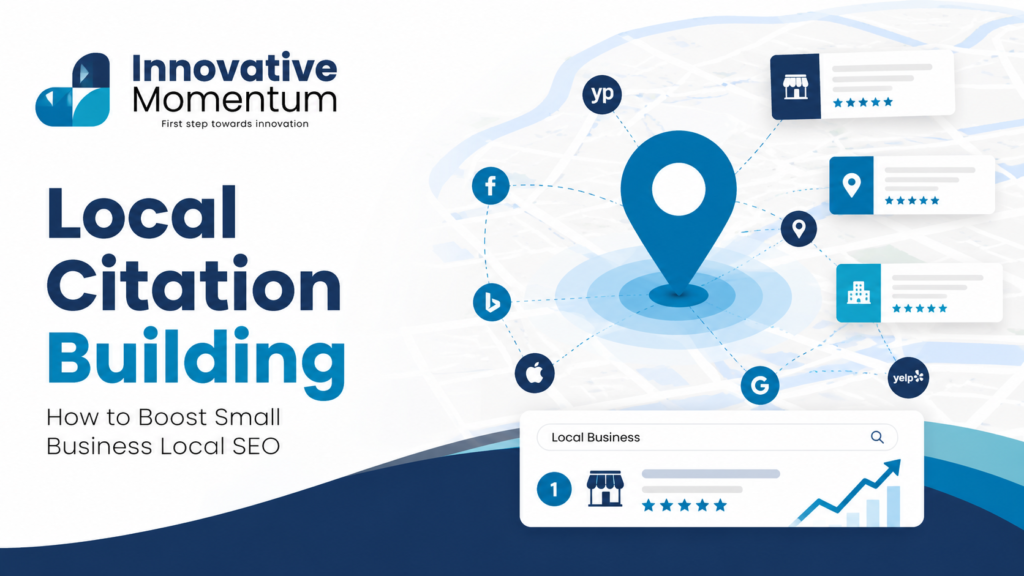
Local businesses have a link building shortcut that national businesses do not have access to: local citations. A citation is any online mention of your business name, address, and phone number (NAP). Not every citation includes a hyperlink, but structured citations on major platforms carry significant weight in Google’s local pack algorithm regardless.
The most effective approach is to work in tiers, starting with the highest-impact platforms first rather than trying to be everywhere at once.
Tier 1 citations (free, highest priority): Google Business Profile, Apple Maps, Bing Places, Facebook, and Yelp. These are the platforms Google explicitly cross-references when validating local business data. If your NAP is inconsistent across even two of these, it creates conflicting signals. Claim every one of these before doing anything else in your local SEO program. For a deeper look at how these fit into a full local strategy, see our guide on local SEO for small businesses.
Tier 2 citations (industry-specific directories): The right directories depend on your vertical. A plumber should be in HomeAdvisor and Angi. An accountant belongs in CPA Directory and AICPA’s locator. A dentist gets meaningful traffic and citation weight from Healthgrades and ZocDoc. These industry-specific directories carry more topical relevance than general directories and are more likely to send actual referral traffic as a secondary benefit.
Local citations: Chamber of Commerce membership typically runs $300 to $500 per year and includes a directory listing on a locally trusted domain. Local business association directories, local newspaper business listings (many are free or low-cost), and city-specific online directories round out this tier. These matter most for businesses competing in a specific metro area rather than nationally.
The single most important factor across all citation tiers is NAP consistency. Your business name, address, and phone number must appear identically on every platform. “123 Main Ave” and “123 Main Avenue” are not the same to Google’s parsing logic. “Smith Plumbing LLC” and “Smith Plumbing” are not the same. Run a citation audit using BrightLocal or Whitespark before building new citations, so you are not amplifying inconsistencies you already have.
Frequently asked questions
How many backlinks do I need to rank?
There is no universal answer. It depends entirely on your competition. For a local service business in a small city, 20 to 50 quality backlinks may be sufficient to dominate. For a national B2B company competing on broad terms, thousands of links from authoritative domains may be needed. Use Ahrefs or Moz to check the backlink profile of the pages currently ranking in your target position. That is your benchmark, not an arbitrary number.
Can I build links too fast?
Acquiring a large number of links very quickly from low-quality sources in an obvious pattern can trigger a manual penalty. Natural link growth is gradual and varied in source type. If you do digital PR and earn 50 links from a single campaign, that is natural — you earned media coverage. If you buy 50 links from a marketplace in a week, that is the pattern Google’s algorithms are trained to identify and act on.
Is link building worth it for a new website?
In the first 6 to 12 months of a new site, time and budget are better spent on technical SEO, content development, and Tier 1 citations. A new site with clean technical foundations and 10 to 15 well-written pages will accumulate early links naturally as it gets indexed and people find the content. Active outreach makes more sense once you have enough indexed pages and enough content that a journalist or blogger actually has something worth linking to. Starting outreach too early often means investing effort into a site that is not yet link-worthy.
What does a “natural” link profile look like?
Varied anchor text is the first marker. A natural profile is mostly brand name (“Innovative Momentum”), bare URLs (“innovativemomentum.com”), and generic anchors (“here,” “this guide,” “click here”), with keyword-rich anchors making up no more than 10 to 20 percent of the total. A profile where 60 percent of anchors are exact-match keywords is a flag. Second, varied referring domains — not all from one source, one niche, or one country. Third, a mix of link types: editorial mentions, directory listings, partnership links, and the occasional forum or community reference. And fourth, gradual growth. A site that earns 5 links per month for two years and then suddenly acquires 500 in one month has an unusual pattern that warrants explanation — digital PR can justify it, but it will still be scrutinized.
Understanding how much SEO investment is realistic for a small business helps put link building in context — it is one part of a broader strategy, and the budget you allocate to it should reflect your competitive situation. If you want help building a link strategy that fits your market and your timeline, reach out to Innovative Momentum.

Keep reading
Related insights
No comments yet. Be the first to share your thoughts.